Building the Governance Layer for AI Systems
Founder of Sevaq. AI leader, physicist, researcher, and builder of enterprise-scale machine learning systems.
Over the past 15+ years, I have built AI, machine learning, and analytical systems across finance, healthcare, aerospace, academia, and enterprise technology. My work spans Barclays, CVS Health, Viasat, Saint Louis University, Rocket Mortgage, and now Sevaq, where I am building the governance layer for autonomous AI systems.
From Physics to AI Governance
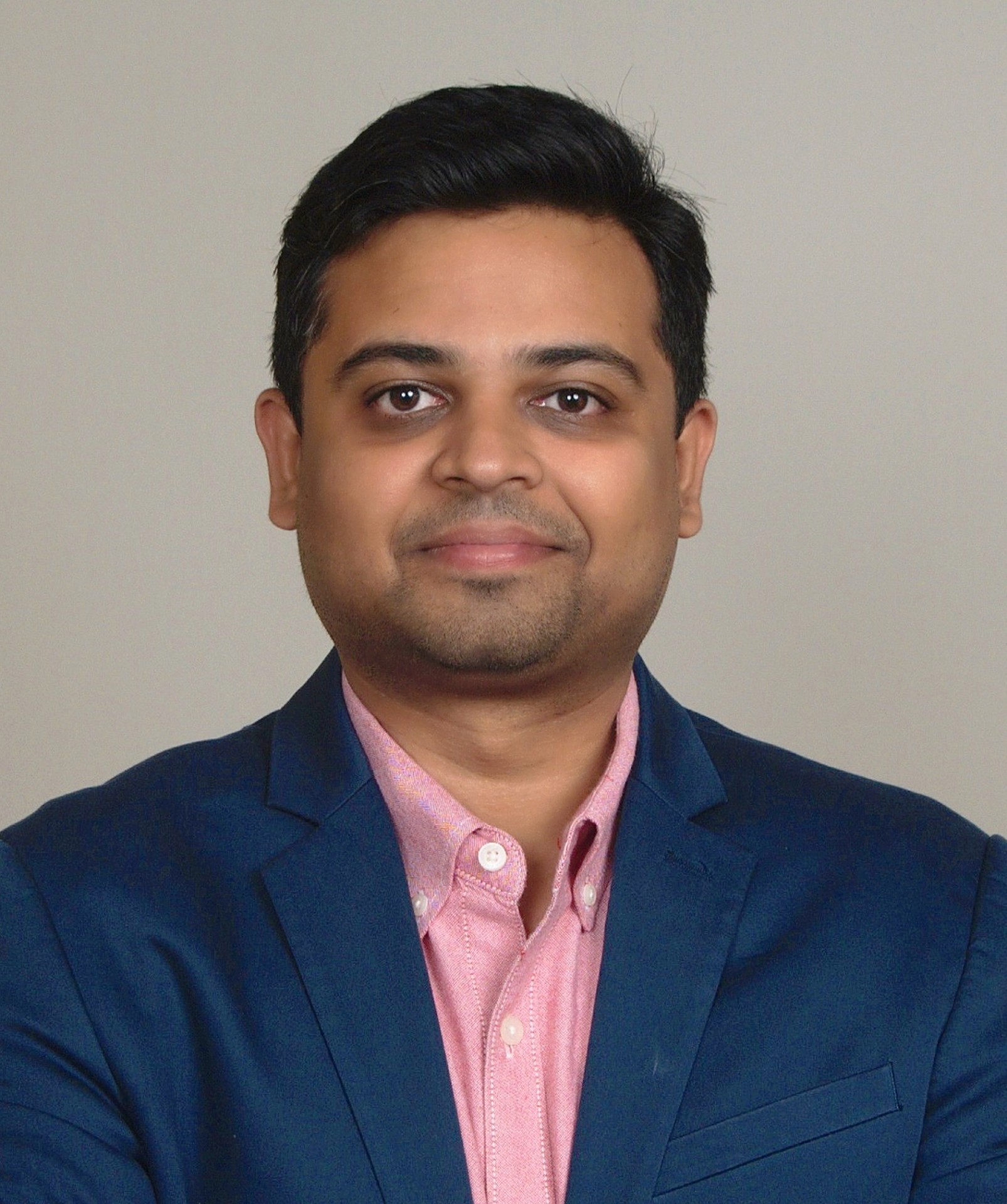
Anurag began his career studying complex systems, nonlinear dynamics, synchronization, and predictive modeling through theoretical and mathematical physics.
His academic work explored how intelligent behavior emerges from interacting systems, spanning network science, dynamical systems, statistical physics, and computational modeling.
Over the following decade he built machine learning systems across aerospace, finance, healthcare, and enterprise technology environments.
His experience spans Viasat, Barclays, CVS Health, Saint Louis University, Rocket Mortgage, and now Sevaq.
As AI systems become increasingly autonomous, the critical challenge shifts from intelligence to governance.
Sevaq was founded to solve that problem.
A path through research and industry
- Indian Institute of Technology BombayB.Tech Engineering Physics
- University of MarylandM.S. Theoretical & Mathematical Physics
- University of MarylandPh.D. Chemical Physics
- Goddard Planetary Heliophysics InstituteGraduate Research Assistant · University of MarylandContributed to the NASA Space Weather Modeling Framework through the University of Maryland at Goddard.
- ViasatData ScientistBuilt predictive analytics and anomaly detection systems using large-scale telemetry and IoT data.
- BarclaysVice President, Data ScienceLed cloud modernization, machine learning deployment, customer analytics, and regulated AI systems.
- CVS HealthSenior Manager, Data ScienceBuilt patient engagement, personalization, and healthcare AI initiatives.
- Saint Louis UniversityAssistant ProfessorLed applied machine learning research and healthcare AI collaborations.
- Rocket MortgageTeam Leader, Data Science & ML EngineeringLed MLOps modernization, governance, monitoring, and enterprise AI deployment frameworks.
- SevaqFounderBuilding governance infrastructure for AI systems.
The science behind the systems
Complex Systems
Understanding how intelligent behavior emerges from interacting systems.
Nonlinear Dynamics
Modeling stability, feedback, adaptation, and emergent behavior.
Synchronization Theory
Studying how distributed systems coordinate and converge.
Statistical Physics
Applying probabilistic reasoning to complex systems.
Predictive Modeling
Building mathematical frameworks for forecasting and decision making.
Network Theory
Understanding relationships and information flow across connected systems.
Governance is the new frontier of AI.
Across every industry I worked in — finance, healthcare, aerospace, academia, and enterprise technology — the challenge was never simply building AI systems.
The challenge was understanding:
- when to trust them
- when to verify them
- how much autonomy to grant
- how to enforce policies
- how to maintain accountability
As AI systems become more autonomous, governance becomes as important as intelligence.
Sevaq is my attempt to build the governance layer for AI systems.
Where I spend my time
The Five Governance Engines
Risk Classification Engine
Determines consequence and risk associated with AI decisions.
Adaptive Orchestration Engine
Selects execution strategies based on risk, complexity, confidence, latency, and cost.
Policy Evaluation Engine
Applies autonomy, approval, escalation, and compliance policies.
Independent Verification Engine
Separates generation from evaluation and challenges outputs before action.
Trust Scoring Engine
Produces observable trust metrics based on evidence quality, verification strength, confidence, and residual risk.
"Together these form what we call the Governance Layer for AI Systems."